Tekscan, TENS, and Biopak for TMJ Treatment: A Non-Surgical Approach to Bite Correction
If you are dealing with jaw pain, TMJ symptoms, or a bite that does not feel right, surgery is not the first option that should be discussed. Modern dentistry offers precise, non-surgical tools that identify exactly what is wrong and guide treatment with a level of accuracy that was not possible a decade ago.
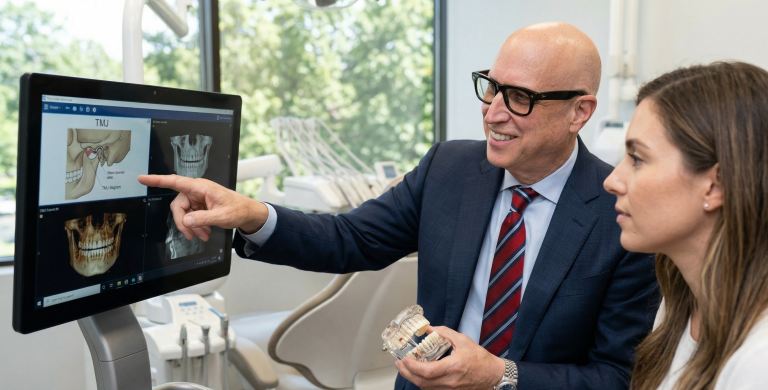
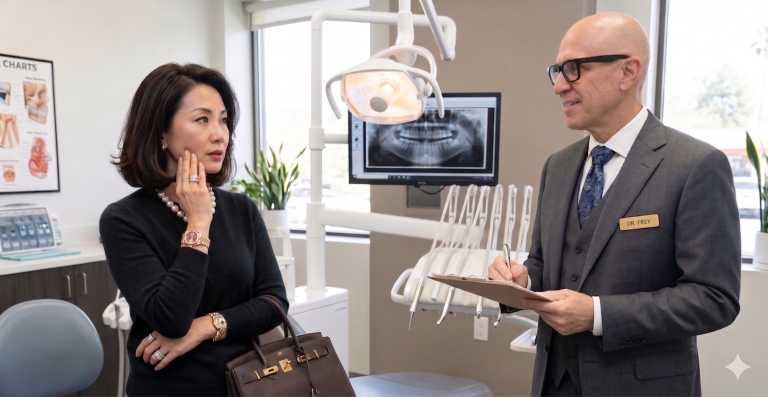
At Perfect White Smile in Beverly Hills, Dr. David S. Frey uses three advanced technologies to evaluate and treat TMJ disorders: Tekscan, TENS, and Biopak. Each one addresses different questions about your jaw, your muscles, and your bite. Used together, they support a comprehensive, non-surgical TMJ treatment plan.
Quick Answer: Can TMJ Be Treated Without Surgery?
Yes. Most TMJ disorders can be treated without surgery. Modern technology, such as Tekscan digital bite analysis, TENS muscle relaxation therapy, and the Biopak diagnostic system, allows a TMJ dentist to identify the root cause of jaw pain, relax overworked muscles, measure the bite with precision, and guide non-surgical bite correction that restores comfort and function.
Why TMJ Treatment Needs More Than a Visual Exam
While a standard dental exam can reveal worn teeth, an uneven bite, or signs of clenching, but it cannot show how the bite distributes pressure, how the muscles are firing, or how the joint is moving in real time. Treatment becomes a guessing game without that information.
The combination of Tekscan, TENS, and Biopak gives a TMJ dentist objective data on three things that matter most:
- How your teeth come together under pressure
- How your jaw muscles behave when relaxed versus stressed
- How your jaw joint actually moves during everyday function
That data is what makes non-surgical TMJ treatment predictable rather than experimental.
What Is Tekscan?
Tekscan is a digital bite analysis system. Instead of using traditional articulating paper, which only shows where the teeth touch, Tekscan uses a thin sensor that records:
- Where each tooth makes contact
- How hard each contact is
- In what order the contacts occur
- How long each contact lasts
This results in a real-time, color-coded map of the bite. High-pressure points, premature contacts, and imbalances stand out clearly. These are often the hidden contributors to TMJ symptoms, jaw pain, and uneven tooth wear.
Tekscan is essential for bite correction. It allows precise, measured adjustments rather than relying on touch alone.
What Is TENS Therapy?
TENS stands for Transcutaneous Electrical Nerve Stimulation. For TMJ care, it is a gentle, non-invasive therapy that delivers a low-level electrical pulse to the jaw and facial muscles. The pulse causes the muscles to relax through a rhythmic, comfortable contraction.
This step matters because most TMJ patients have chronically overworked jaw muscles. When those muscles are tight, they pull the jaw out of its natural resting position. Any bite analysis done in that strained state would simply reinforce the existing dysfunction.
The muscles release when TENS is used first. The jaw is able to settle into a more neutral, physiologically comfortable position. This is the position that should guide bite evaluation and correction, not the one created by years of muscle tension.
What Is Biopak?
Biopak is a comprehensive diagnostic system that measures how the jaw functions as a whole. It records three sets of data simultaneously:
- Jaw movement, including range of motion, deviations, and irregular patterns
- Muscle activity, using electromyography (EMG) to detect overactive or imbalanced muscles
- Joint function, capturing sounds and movement patterns from the temporomandibular joint itself
Where Tekscan focuses on the bite and TENS focuses on the muscles, Biopak focuses on the bigger picture. It reveals how the joint, muscles, and bite interact during real movement, which is critical for diagnosing complex TMJ cases.
How Tekscan, TENS, and Biopak Work Together
These three technologies are most powerful when used in sequence, which matters immensely.
- TENS first. The jaw muscles are relaxed using TENS therapy. This eliminates the influence of chronic muscle tension and allows the jaw to find a more natural position.
- Biopak next. With the muscles relaxed, Biopak measures how the jaw is moving and how the muscles are firing. This provides a baseline of true jaw function rather than guarded, painful function.
- Tekscan last. With the jaw in a comfortable position and function understood, Tekscan measures the bite with precision and guides any adjustments needed for stability.
This sequence supports an accurate, non-surgical approach to TMJ treatment and bite correction.
Who Benefits From This Approach
Non-surgical TMJ treatment using Tekscan, TENS, and Biopak is appropriate for a wide range of patients, including those with:
- Chronic jaw pain or facial pain
- Frequent headaches or migraines linked to clenching
- Clicking, popping, or limited jaw movement
- A bite that feels unstable
- Worn, chipped, or sensitive teeth from grinding
- Neck and shoulder tension related to jaw posture
- Symptoms that have not improved with night guards alone
Patients who have tried generic over-the-counter solutions, or short-term treatments, often see meaningful change once their care is guided by objective data.
What to Expect at a TMJ Evaluation
A comprehensive non-surgical TMJ evaluation typically includes:
- A detailed health and symptom history
- A clinical exam of the teeth, gums, jaw joint, and surrounding muscles
- Diagnostic imaging when indicated, such as a CBCT scan
- TENS therapy to relax the jaw muscles
- Biopak measurements of jaw movement, muscle activity, and joint sounds
- Tekscan digital bite analysis
- A clear treatment plan based on the findings
Each step builds on the one before it, and by the end of the evaluation there is an evidence-based picture of what is happening and what to do about it.
Treatment That Follows the Diagnosis
Treatment is tailored to the patient once the data is in. Common non-surgical options include:
- A custom orthotic or therapeutic appliance designed to support the jaw in its corrected position
- Targeted bite adjustments guided by Tekscan readings
- Phased restorative dentistry to stabilize the bite long term when needed
- Coordinated care with physical therapy, ENT, or sleep medicine when appropriate
The goal is the same in every case: relieve pain, restore function, and protect the result over time, all without surgery whenever possible.
Frequently Asked Questions
Is non-surgical TMJ treatment effective?
Yes. The majority of TMJ patients can be successfully treated without surgery, especially when care is supported by objective tools such as Tekscan, TENS, and Biopak. Surgery is usually reserved for a small percentage of structural cases that do not respond to comprehensive non-surgical care.
Is TENS therapy painful?
No. TENS is a gentle, non-invasive therapy. Most patients describe the sensation as a mild, rhythmic tapping or pulsing in the jaw and facial muscles. Most patients respond by saying the treatment is relaxing.
How is Tekscan different from regular bite paper?
Articulating paper only marks where the teeth touch. Tekscan records where, how hard, in what order, and for how long each contact occurs, which is displayed in real time. That level of precision is what allows measured bite correction rather than estimated adjustments.
Do I need all three technologies?
For straightforward cases, not always. Patients with chronic TMJ symptoms, complex bite issues, or cases that have not responded to previous treatment, may use Tekscan, TENS, and Biopak together to provide the most accurate diagnosis and the most predictable outcome.
How long does non-surgical TMJ treatment take?
Pain relief is often seen within a few weeks of starting treatment with a properly designed orthotic and a corrected jaw position. Long-term bite stabilization can take several months, depending on the complexity of the case.
Does insurance cover TMJ diagnostics and treatment?
Some medical and dental plans cover diagnostic imaging and parts of TMJ therapy, while comprehensive bite correction is often considered elective. The Perfect White Smile team can help review benefits during your consultation.
The Bottom Line
TMJ disorders are complex, but they are not a mystery. With Tekscan, TENS, and Biopak, a TMJ dentist can measure the bite, relax the muscles, and analyze jaw function with a level of precision that makes non-surgical treatment both predictable and lasting.
Schedule a Non-Surgical TMJ Consultation in Beverly Hills
Dr. David S. Frey is a Beverly Hills cosmetic and TMJ dentist with extensive experience in advanced bite analysis, non-surgical TMJ treatment, and root-cause bite correction. To learn more or schedule an evaluation:
A precise diagnosis is the first step toward lasting relief.