
Hand finished
Shaped on site by a ceramist with over 30 years of experience.
A veneer is artistry in porcelain. Each shell is shaped and shaded by hand to flatter your face, not just your teeth.
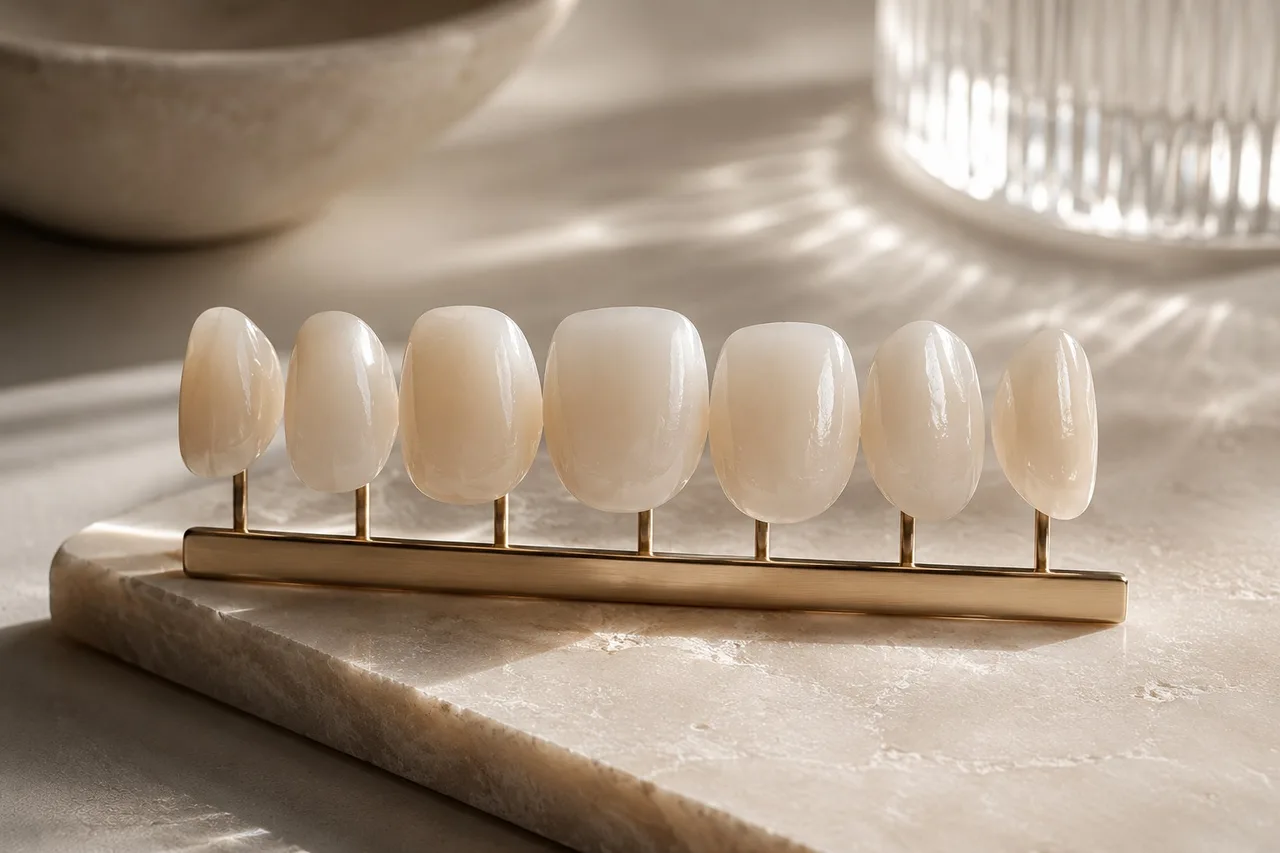
Our veneers are designed in collaboration with an on site master ceramist, so color, translucency, and shape are refined in person rather than mailed back and forth to a distant lab.
The result is a smile that reads as yours: aligned, bright, and natural in any light.
The details that turn a procedure into a result worth keeping.
Shaped on site by a ceramist with over 30 years of experience.
We preserve as much natural enamel as the result allows.
Preview and refine the shape before anything is permanent.
A short video on how temporary veneers let you live with the shape and shade before the porcelain is made.
Getting veneers is not usually painful: the teeth are numbed before the thin layer of enamel is prepared, and sedation is available if dental visits make you anxious. Afterward, some sensitivity to hot and cold, or tender gums, is common while your teeth and bite settle. Pain that throbs or lingers is different, and we would rather check the fit and your bite than have you wait it out; our article on throbbing pain after veneers explains what is normal and what is not.
Yes. Porcelain veneers are bonded to your teeth and handle normal biting and chewing, so your diet does not need to change much. As with natural teeth, it is wise not to chew ice, hard candy or nuts, and to bite very hard foods with your back teeth. Removable snap on veneers are different: they are resin covers that suit softer foods and are best taken out for anything hard or sticky, as our article on eating with snap on veneers explains.
Surface stains usually can. Porcelain resists staining better than natural enamel, but coffee, tea, red wine and tobacco can still dull it over time, and a professional cleaning and polish removes that surface staining. Whitening gel does not change the color of porcelain, so if you would like your natural teeth brighter, it is best to whiten them before your veneer shade is chosen. Our article on removing stains from veneers goes through the options.
Not usually. A thin layer of enamel is normally prepared so the porcelain sits naturally, and enamel does not grow back, so veneers are a long term commitment, although the veneers themselves can be replaced if they chip, wear or darken. If keeping as much natural tooth as possible matters most to you, Lumineers or dental bonding may be worth discussing, and Dr. Frey will tell you which suits your teeth.
Veneers suit healthy teeth and gums when you want to change the color, shape or spacing of your smile: stains that whitening cannot lift, chips, small gaps, small or uneven teeth, or worn edges. Decay, gum problems and any clenching or grinding are addressed first, because an unbalanced bite can chip or wear new porcelain. Dr. Frey confirms whether veneers are right for you at your consultation, and sometimes a more conservative option such as bonding is enough.
Yes. Veneers can be replaced when they chip or crack, darken, stop feeling comfortable, or when the gums recede around them, and a small problem can sometimes be repaired instead. Before new veneers are made we look at what wore the old ones down, and if you grind, a custom night guard can protect them while you sleep. Our article on when to replace veneers lists the signs to watch.
Care at Perfect White Smile is rarely a single procedure. These often work alongside porcelain veneers.
In a private consultation, Dr. Frey looks at your teeth, your bite and your face together, and tells you honestly whether porcelain veneers are the right way to reach the smile you have in mind.
Accessibility