
Conservative by design
We begin with the least invasive care that works.
Surgery is rarely the first answer. We begin with careful, non surgical care that guides the jaw, the bite and the airway toward balance.
Dr. Frey treats the joint as part of a larger system. When the bite, muscles, and joint work together, the pain that brought you in tends to ease.
Custom appliances gently guide the jaw toward a more natural position. Progress is gradual, measured, and reversible, so nothing is rushed and nothing is made permanent before it needs to be.
Are you living with jaw pain but hoping to avoid surgery? At our Beverly Hills office, Dr. Frey treats TMJ pain with two custom appliances: the Advanced Lightweight Functional (ALF) appliance and the Daytime Nighttime Appliance (DNA). He uses them to help the jawbone develop naturally, without surgery or restorations.

The ALF appliance is a custom made, removable orthodontic appliance that gently widens the jaw and improves muscle function. Unlike traditional braces, it is nearly invisible, because it sits on the tongue side of the teeth. It brings together features of other orthodontic appliances and uses gentle pressure to mimic natural growth.
They may suit you if your jawbone is underdeveloped and you have jaw pain you would rather not treat with surgery. We also use them to treat sleep apnea, as described further down this page. A consultation with Dr. Frey is how to find out whether they are right for you.
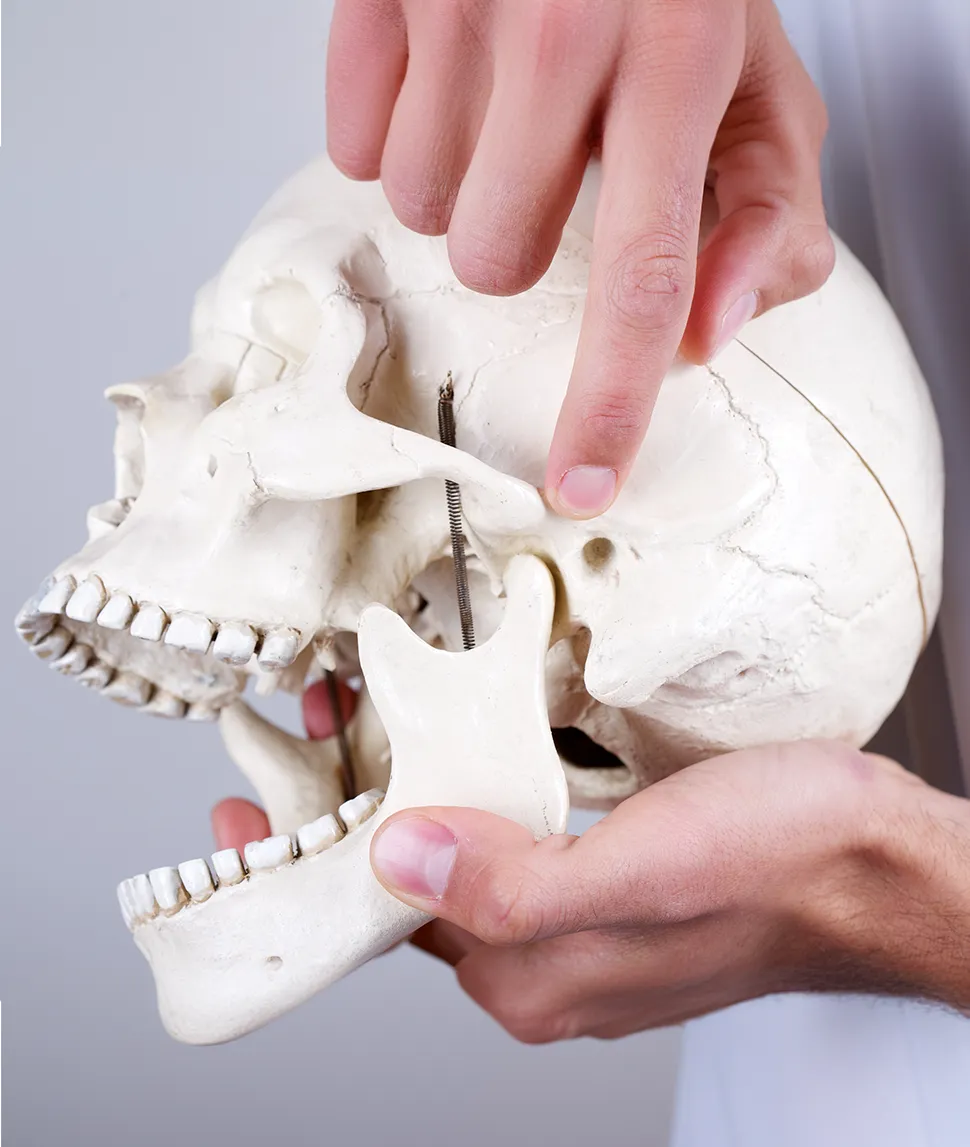
Physiological orthodontics is our approach to straightening teeth while helping the jaw bones develop to their full genetic potential. It stimulates the facial bones to create a healthy airway and full jaw function while straightening the teeth, all at the same time. Unlike traditional orthodontics, it looks at the entire face, not just the teeth.
With controlled arch orthodontics, the aim is to straighten the teeth without setting up TMJ or sleep apnea problems later in life, and to ease existing TMJ and sleep apnea symptoms. Once the jaw is in a stable position, neuromuscular orthodontics can help keep it there.
Jaw surgery is a major step, and it does not always settle how the bite feels. Some patients come to us years after surgery because their bite has never felt right.
Experiences like this are why we start with the least invasive care that can work, and look at the bite, the muscles and the joint together before anything is made permanent.

At our office we can also treat sleep apnea, using the ALF and DNA appliances or a fixed anterior growth guidance appliance. The aim is to open the airway while placing the jaw in a proper physiologic position and giving the tongue room to rest. By developing the arch, we can create a better airway.
We cannot promise a result. For some patients, though, this offers a way to treat sleep apnea without a CPAP machine, which is usually worn every night, and without a dental mouthguard.
The fixed removable lingual arch (FRLA) is a fixed appliance worn around the first molars of the lower jaw. It anchors the molars and helps widen the arch, giving the tongue more room. To place it, we temporarily bond composite pads to the lower molars, which opens the bite and lets the jaw move freely as it remodels.
Myofunctional therapy is part of your comprehensive orthodontic treatment. In our office we call its goals The Big 3: no unusual tongue habits, breathing through the nose, and lips that close comfortably. For the bone to grow and the teeth to move properly, all three need to be under control, and if any of them is weak, it can affect the treatment.
The exercises strengthen the muscles of the lips, jaw and tongue so the mouth functions properly, and doing them is crucial to the treatment. The tongue needs to rest in the palate, you need to be able to breathe through your nose, and your lips need to be able to touch. Without that, it is difficult to succeed with this therapy. You can read more about myofunctional therapy on our blog.

Once the growth appliance phase is complete, braces are placed on the upper and lower teeth. During this phase, the spaces that opened between the teeth in the first phase are closed by moving the back teeth forward and straightening the teeth. An FRLA is also placed on the upper jaw to provide stability and maintain the new width. The braces and the FRLA stay in place until the teeth are aligned, and how long that takes varies from patient to patient.
Once the braces come off, retainers hold the teeth in place while everything settles. Dr. Frey will tell you how long to wear them, and when.
Dr. Frey explains how he looks for the cause of jaw pain and treats it conservatively, without surgery.
Dr. Frey offers this system to people with TMJ, headaches, neck pain and sleep apnea. Because it brings the jaw into proper alignment, it may also appeal to anyone who would like more proportionate facial features.
It helps in a number of ways, both aesthetic and functional. The appliance develops the upper jaw in three dimensions over time, remodeling the bone to improve form and function. By guiding the bone, we aim to help the jaw reach the genetic potential that environment held back during growth. Beyond bringing more balance to the face, the aim is to open the airway, which can help with sleep apnea, and to relieve TMJ pain.
The details that turn a procedure into a result worth keeping.
We begin with the least invasive care that works.
Removable appliances ease the jaw toward balance over time.
Bite, muscles, and joint are treated together, not apart.
Care at Perfect White Smile is rarely a single procedure. These often work alongside tmj treatment without surgery.
Sit with Dr. Frey for a private consultation. He will examine your bite, jaw and airway and walk you through the conservative options that fit your case.
Accessibility