
More than the jaw
Headaches, ear pressure, and neck tension often start at the bite.
The signs of a strained bite rarely stay in one place. What feels like a headache or an earache often traces back to the jaw.
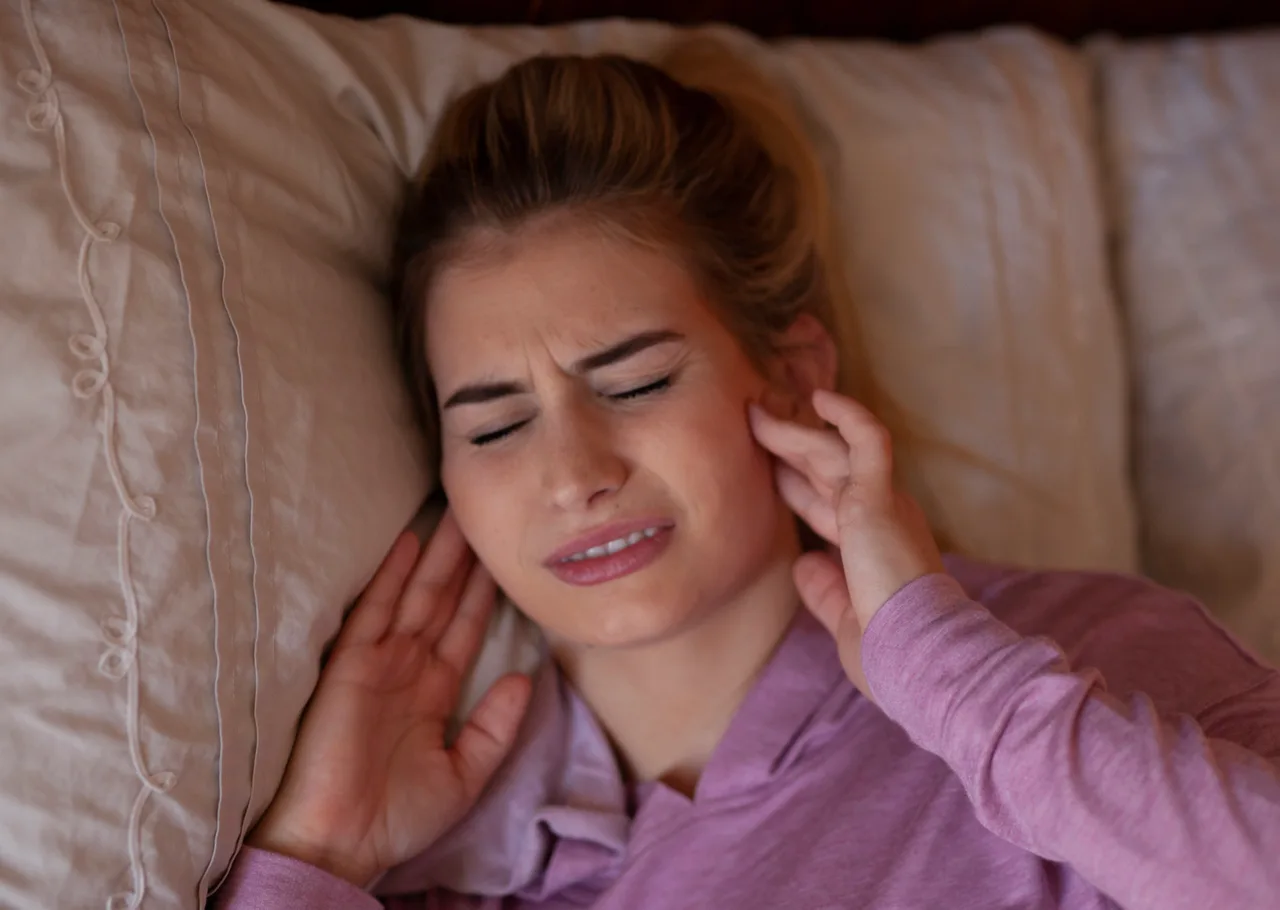
Clicking, popping, and morning soreness are the familiar signs. Less obvious are the headaches, ringing ears, and neck and shoulder tension that follow when the bite falls out of balance.
Because the jaw sits at the center of the head and neck, its strain radiates outward. Worn teeth, clenching, and disturbed sleep are often the same problem seen from different angles.
TMJ rarely stays in the jaw. Because the joint, the muscles and the bite work as one system, strain in one place tends to surface somewhere else, from the teeth to the ears to the hands. These are the symptoms we see most often, and what is happening behind each one. Many trace back to a bite that is out of balance, and our page on TMJ causes explains how that imbalance develops.

With TMJ, your teeth can wear faster than they would if your jaw were properly aligned. That erosion can lead to uneven tooth wear, a smaller range of jaw motion and gum recession. If you feel pain in your jaw or teeth, TMJ may be the cause.
Facial pain is very common with TMJ. The condition affects the muscles of the head, neck and face, so if a nerve gets pinched, the pain can travel into your face. A bad bite also pulls the jaw and the muscles around it out of place, and that imbalance can cause pain in the face or behind the eyes.
A misaligned bite sets off a ripple effect through the neck, shoulders and back. Sore, tight, contracted jaw muscles tilt the head and shoulders, and the muscles of the neck, shoulders and back overcompensate. The result is pain and strain through the upper half of your body.

Ear congestion, earaches, dizziness and ringing in the ears can all trace back to TMJ. An overworked jaw can make the ear canal sensitive, and when the jaw is misaligned, the muscles and nerves around your ears can be affected. That can bring dizziness, vertigo, ear pain, restricted hearing, sinus pain and a congested feeling in the ears.
When your bite is misaligned, the nerves and muscles of the face, jaw, neck and shoulders may spasm. This can pinch the nerves that run down to the arm, causing numbness and tingling in the arms, hands and fingers. The numbness and tingling may come with or without pain, and can vary in intensity.
When the jaw is not in its proper position, the disk inside the joint is often displaced and the joint spaces close down. That can cause clicking or popping when you open or close your mouth, whether you are eating, yawning or biting. In more severe cases, the displaced disk can lock the jaw after you open wide, so that you are unable to close your mouth. If your jaw locks, it is worth having it seen promptly.
Mild grinding is not a serious problem on its own. It becomes one when it happens unconsciously during sleep. This is called bruxism, and it can be very painful. Over time it can wear down the surfaces of the teeth and sometimes fracture them. Our page on clench and grind relief explains how we calm the muscles behind it.

Headaches are one of the most common complaints among people with TMJ. When the jaw is out of alignment, the muscles of the face, neck and shoulders tense up, which leads to tension headaches. They can be severe and frequent, and they are often misdiagnosed as migraines.
TMJ can affect the posture of your entire body. With an unbalanced bite, the length and activity of your muscles are unbalanced too. When the muscles become overcontracted, they pull you into a forward leaning posture, and that slouch ripples down through the rest of the body. When your body is not lined up properly, your physical and athletic performance can suffer, and you may feel increasingly sluggish and tired through the day.
It is easy to assume your jaw and bite are a local matter with little effect on the rest of your body. That is true when your bite is properly aligned and everything works well, because the muscles can rest and release their energy. When the bite is out of alignment, the muscles are under constant stress, always trying to find alignment. That causes the pain described above, and it reaches other parts of your body too.
None of this has to happen. Once Dr. Frey has diagnosed your TMJ, the first step can be as simple as a custom appliance worn while you sleep, which holds your jaw in proper alignment and can ease your pain and change how you feel day to day.
A short video from our practice on how neuromuscular dentistry looks at migraines, headaches and neck pain that begin with the bite.
At our Beverly Hills office, Dr. Frey treats TMJ symptoms without jaw surgery, including orthognathic and MMA surgery. Jaw surgery should never be taken lightly, and it is not a course of action we recommend. Dr. Frey treats TMJ conservatively, so his approach does not involve wiring your jaw shut or recovering from a strenuous operation.
Removable splints and mouthguards can help with symptoms, but on their own they are a patch rather than a correction, and you may end up wearing one for the rest of your life. Dr. Frey may use an appliance at first to find the position where your jaw is comfortable, then works to make that bite lasting, so your relief does not depend on a splint.
Not necessarily. Some patients wake up with a sore jaw, which can be a sign of grinding or hard clenching during the night. Waking up tired can also mean your muscles have been working against a lot of force while you slept, and many people with an aching jaw do not get a full night’s rest. So TMJ symptoms are not always worse at night, but they are often most noticeable first thing in the morning.
It depends on the pain. Many people with a clicking or popping disk, or a very uneven bite, live with it until headaches, pain or ringing in the ears begin, and that is usually when they look for help. If the bite is never corrected, arthritis in the jaw joint or headaches that continue for years can follow. You can live with TMJ pain, but you do not have to: the aim of treatment is to get you back to enjoying work, family and daily life. Read more about the dangers of untreated TMJ.
Sometimes. For some people the body adapts, and the pain eases on its own over the years. You do not have to wait and see, though. At a consultation, Dr. Frey looks for the cause of your symptoms and treats it with the aim of avoiding surgery and a lifelong splint.
It does not have to be. Dr. Frey treats the imbalance behind TMJ with restorative dentistry, orthodontics or a growth appliance, aiming for lasting relief that does not rely on a splint. Many patients come to us after wearing a splint that did not help. Here, the goal is a corrected bite, not a splint you wear indefinitely or treatment you do not need.
Your jaw joint should be silent when you chew or bite, which means its alignment is normal. Popping, clicking or cracking when you chew or open your mouth is a sign of a problem with the joint, and it is worth having Dr. Frey take a look. Contact us to arrange a visit.
The details that turn a procedure into a result worth keeping.
Headaches, ear pressure, and neck tension often start at the bite.
We read the symptoms together to find their shared source.
Clicking and clenching are worth listening to sooner.
Care at Perfect White Smile is rarely a single procedure. These often work alongside tmj symptoms.
Sit with Dr. Frey for a private TMJ consultation and learn where your symptoms begin, and what a conservative, non surgical approach could do for you.
Accessibility