Comprehensive TMJ FAQ: Symptoms, Cone Beam Imaging, Treatment Options, and What Beverly Hills and Los Angeles Patients Need to Know

TMJ dysfunction is one of the most underdiagnosed conditions in dentistry. Many patients in Beverly Hills and Los Angeles first seek help for chronic headaches, migraines, ear symptoms, or facial pain and tension without realizing the jaw joint is the root cause. TMJ disorders occur when the jaw joint, surrounding bone, muscles, or bite mechanics become inflamed or imbalanced. They should be in a “zone of comfort” or harmony position between the muscles of the head and neck, the TMJ or Temporal-mandibular Joint and the bite!. These issues can affect women at significantly higher rates and often worsen when combined with stress, clenching, grinding, or an unstable bite. This FAQ breaks down everything patients ask—from everyday symptoms to advanced diagnostic imaging questions. Whether you are exploring TMJ treatment, evaluating cosmetic dentistry solutions, deciding on orthodontic braces or Invisalign or simply trying to understand the cause of your discomfort, you will find clear and complete answers below.
What is the TMJ?
The TMJ is the temporal mandibular jaw joint that allows chewing and speaking. The temporomandibular joint connects your lower jaw to your skull and controls jaw movement. When the joint or surrounding muscles become tight, strained, inflamed, or misaligned, it can trigger TMJ disorder.
What causes TMJ disorders?
TMJ can develop from clenching, stress, injuries, arthritis, or bite misalignment problems. Common causes include bruxism, stress, trauma, joint inflammation, disc displacement, misaligned teeth, and airway-related clenching.
What are the most common TMJ symptoms?
Muscle pain, clicking, popping, headaches, limited jaw movement, and ear symptoms like dizziness (vertigo), ringing in the ears (tinnitus) are common. Patients may experience headaches, jaw sounds, chewing pain, facial tension, locking, limited opening, neck pain, or ear pressure or fullness.
Can TMJ cause headaches or migraines?
Yes. TMJ muscle strain often triggers tension or migraine-like pain. Overactive jaw muscles can radiate pain to the temples, forehead, and behind the eyes. Many doctors mistakenly prescribe medication to help alleviate chronic migraines and headaches instead of looking at the patients bite for signs of this joint or muscle imbalance like lower teeth crowding, wear facets on the lower anterior teeth, inward tipping of the lower teeth, narrow dental arches and more.
Why is TMJ more common in women?
Hormonal and connective tissue differences contribute to higher risk. Studies show women experience TMJ disorders at significantly higher rates due to biological, structural, and hormonal factors. We believe that structural muscle position may be the most common reason. The muscles can become fatigued or tired if not worked out or strengthened around the head and neck. Trying to hold a mis-aligned muscle position on weak muscles will result in signs like headaches, neck pain, and facial pain especially around the joint position. Physical therapists known as myo-functional therapists can assist in strengthening and stabilizing the muscles around the head and neck.
Can TMJ cause ear symptoms like ringing in the ears (tinnitus), dizziness (vertigo), or ear fullness?
Yes. The TMJ sits adjacent to the ear canal and shares nerve pathways and a shared ligament known as the discomalleolar ligament (DML), a ligament that connects the malleus (a middle ear bone) to the temporomandibular joint (TMJ). It is also known as the “tiny ligament” or “Pinto ligament,” and it connects the malleus to the articular disc and capsule of the TMJ via the petrotympanic fissure. Inflammation from this ligament that sits near the ear can cause tinnitus, pressure, clogged sensation, or ear pain.
Can TMJ affect your teeth or bite?
TMJ can cause extreme tooth wear, shifting/crowding, and bite changes. Dentists can look at the teeth to help diagnose TMJ. These teeth changes that have occurred over time show what the muscles of the head and neck when these teeth obstacles get in the way of over active muscles try to find a comfortable position to relax. Over-active muscles and bite imbalances often lead to chipped teeth, worn enamel, lower crowding, narrow dental aches or changing bite patterns.
Can cosmetic dentistry help TMJ disorders?
When done correctly, yes—bite-balanced cosmetic dentistry reduces joint strain and is able to relax over-active muscles of the head and neck.. Restorations such as veneers, crowns, can improve bite and chewing function and relieve jaw stress when restored in a physiologic correct position. This corrected physiologic position, known as the “zone of comfort” is in balance with the muscles of the head and neck and the joint position.
What is TMJ density in dental imaging?
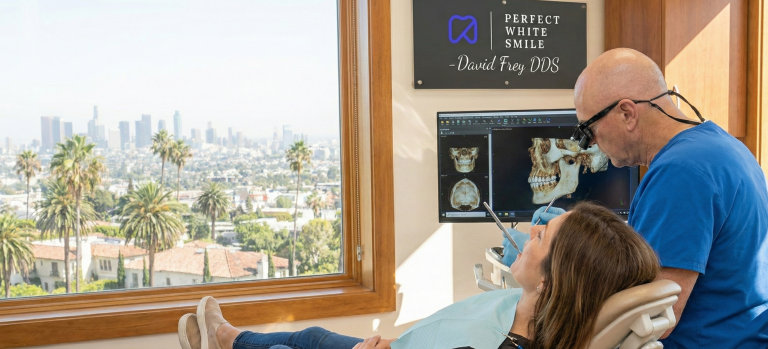
TMJ density refers to the bone strength and thickness of the jaw joint. Dentists analyze the density of the condyle and joint socket using imaging tools to evaluate joint health. The most common tool used is Cone Beam Computed Tomography known as a CBCT. This 3-D x-ray can be used to see through the bone for changes like erosion of the TMJ or where it is placed in the glenoid fossa or joint housing. Many times, excess bone growth occurs known as osteophytes that look like bone spurs on the joint. This is a sign of excess forces on the TMJ and a lack of harmony with the muscles and the bite.
How is TMJ bone density measured?
CBCT and MRI scans are the primary tools for evaluating TMJ bone density. 3D imaging evaluates condylar bone thickness, joint shape, and surrounding structures for signs of thinning, erosion, or inflammation. This is easily seen with a CBCT and a diagnosis can be made. Many dentists now have this expensive, sophisticated, diagnostic tool in their dental offices and is now becoming the standard of care to help patients with TMJ, muscle and bite issues.
What is the difference between TMJ density and bone quality?
Density measures thickness; bone quality includes overall structural health. Bone quality accounts for mineralization, blood supply, structural integrity, and resilience. The TMJ has a cortical layer of bone around the joint that can be seen if it is intact or not. The actual part of the TMJ is known as the condyle and look like a thumb. When the condyle of the TMJ is bent, overly large, overly small or eroded can be seen with the CBCT.
What are the best imaging tests for TMJ?
CBCT is best for hard tissue; MRI is best for soft tissue. A combined CBCT and MRI approach provides the most complete evaluation. Many dentists can determine if enough space is available for soft tissue using the CBCT. The condyle of the joint needs space to move freely in the joint space. The articular disc should be able to sit on top of the condyle and move freely. The CBCT can measure this space to determine if the joint has space or not. Even though the MRI may be even more exact for determining the health of the soft tissue around the condyle, the CBCT can give the dentist enough diagnostic information about the soft tissue that exists around the condyle of the TMJ, to treat a patient successfully.
How does low TMJ bone density affect jaw function?
Low density can weaken joint stability and worsen pain or clicking. Patients may experience difficulty chewing, increased inflammation, bite shifts, or a higher risk of degenerative changes. Its important to align the jaw on track with the muscles of the head and neck for a smooth open and close function. The bones of the TMJ should not interfere with any other bony obstacles, like the bones of the skull, during this movement.
How is TMJ diagnosed?
Diagnosis includes a thorough dental exam that asks a host of questions from a detailed medical history to an exact location of the pain around the head and neck. Understanding the frequency of this pain and how intense the pain is. Looking intensely at the existing bite with a clinical exam is also beneficial. Narrow dental arches, wear facets on the teeth, lower anterior tooth crowding and more is very important to determine if a muscle imbalance exists. Using a CBCT to evaluate the jaw joints is just the tip of the iceberg when reading this 3-D x-ray. We need to also look at the health of the teeth roots, sinuses, airway space, and neck posture which can all help diagnose the origin of the patients TMJ. It is also important to assess the muscles with EMG (electromyography) sensors. These sensors can determine muscle activity and whether over activity exists during resting of the jaw or when the jaw is in a closed position with the teeth barely touching.
How is TMJ treated?
We like to use the mnemonic SHAME! Soft diet, Heat compresses, Analgesics like Advil, Mouthguard and Exercises. Implementing all 5 letters at once is a very good remedy to helping alleviate the symptoms of TMJ. Options include orthotics or a mouthguard that is balanced with the bite, and physical therapy such as exercises. Understanding that a simple mouthguard will not necessarily remedy the pain from TMJ because the mouthguard needs to be placed in a physiologic correct jaw position where the muscles are relaxed and calm. The mouthguard should also be balanced correctly as the back or posterior molars should contact first without any teeth in the anterior or front contacting. Patients should function on these mouthguards so they can eat and speak with them. Using their own habitual bite position to eat will only exacerbate the pathology in the joint and therefore we try and avoid that from happening.
Is surgery required for TMJ disorders?
Rarely. Most cases improve with non-invasive treatment. Surgery is reserved for severe structural damage or joint degeneration. Many neuro-muscular dentists can resolve these cases without surgery.
Can TMJ disorders go away on their own?
Mild cases may improve, but chronic cases usually require treatment. Early care prevents long-term damage. You need to understand the difference between signs and symptoms. The pain experienced with TMJ is a sign. Many patients have TMJ but never experience any pain. Going away may just mean that you don’t feel any pain but the imbalance of the joint, muscles and bite still exist and will continue to deteriorate without intervention.
Is TMJ related to posture?
Forward head posture often increases jaw strain. Poor posture shifts jaw alignment and creates chronic muscle tension. The effects of this is easily seen on a CBCT as calcifications of the stylo-hyoid ligament or a ring of bone on C1 known as ponticulus postulus is noticed. This is a sign of an improper bite alignment that can affect the posture of the neck. The bite plane is almost at the same level as C1 or C2. When the bite plane is not level it can affect how the head is held above the spine. The head weighs 10 pounds which is as heavy as a bowling ball and if the bite is not level with the horizontal plane it can add ten pounds of pressure for every inch forward.
Can TMJ cause dizziness?
Yes. TMJ inflammation can affect balance centers. Nerve pathways near the joint can influence balance and spatial orientation. The TMJ sits adjacent to the ear canal and shares ligament known as the discomalleolar ligament (DML), a ligament that connects the malleus (a middle ear bone) to the temporomandibular joint (TMJ). It is also known as the “tiny ligament” or “Pinto ligament,” and it connects the malleus to the articular disc and capsule of the TMJ via the petrotympanic fissure. Inflammation from this ligament that sits near the ear can cause tinnitus, pressure, clogged sensation, or ear pain. Ouch!
Are nighttime habits linked to TMJ?
Grinding and clenching during sleep are major indicators that something is not right. This is a major sign that the muscles of the head and neck are not balanced with the bite. Even though stress can often exacerbate the parafunctional habit of clenching or bruxing, it is not the cause. The cause is most often from a structural misalignment between the muscles and the bite.
Can stress make TMJ worse?
Stress triggers clenching, tightening muscles, and increasing pain. Emotional tension is a major TMJ trigger. Stress can exacerbate the symptoms of TMJ but is not the cause.
How long does TMJ treatment take to work?
Relief may begin immediately with the right TMJ trained dentist! Making a mouthguard that is just not a piece of plastic over the teeth but instead is actually aligned with the muscles of the head and neck and the bite. This is done using sophisticated medical equipment that can help the dentist determine where the jaw needs to be repositioned so that it is in the “zone of comfort”. Once this happens, patients report immediate relief in areas of discomfort or pain. Each patient has a different degree of comfort and is usually very positive to continue treatment within weeks, but full stabilization takes longer. Progress depends on severity and treatment type.
Does untreated TMJ get worse?
It can lead to worsening pain and joint degeneration. Chronic inflammation may accelerate arthritis or bite collapse. Yes but the pain may subside over long periods of time and patients learn to live with it not functioning correctly.
Can TMJ affect facial appearance?
Yes. TMJ can change muscle symmetry and jaw posture. Overactive muscles or joint imbalance can alter facial aesthetics. Patients often notice one side of their jaw more pronounced than the other side. This can be from muscle strength imbalance or from a deviated jaw position.
Should I see a dentist or a doctor for TMJ?
A TMJ-trained dentist is the most qualified for bite-related TMJ issues. Dental specialists address the structural causes behind most TMJ dysfunction. Its a deep rabbit hole of education and finding a well trained dentist is key.
TMJ Disorders Can Go Unnoticed
TMJ disorders can impact comfort, bite function, facial balance, and overall well-being. Many patients live with symptoms for years without realizing the TMJ is the source. Advanced imaging such as CBCT and MRI now allow dentists to evaluate TMJ density, bone quality, joint stability, and muscle strain with accuracy. Whether your symptoms come from clenching, inflammation, bite issues, or structural bone changes, an experienced TMJ and cosmetic dentist can help restore stability and relief.
Schedule TMJ Evaluation in Beverly Hills, Los Angeles
If you are experiencing TMJ pain, headaches, jaw clicking, bite changes, or facial tension, expert evaluation with David Frey DDS can make a significant difference.
Perfect White Smile – Cosmetic & TMJ Dentistry Beverly Hills
433 N Camden Dr Suite1070
Beverly Hills, CA 90210
Phone: (310) 276-4537