TMJ Pain Isn’t Just Stress: A Deeper Look at a Common but Misunderstood Condition

Being told that your jaw pain, headaches, or clicking jaw is “just stress,” is not out of the ordinary. In fact, it is one of the most common explanations patients hear. It is also the most incomplete.
While stress can contribute to temporomandibular joint (TMJ) symptoms, in most cases it is a trigger, not the root cause. The real story involves how your jaw joint, muscles, and bite work together, and what happens when that system falls out of balance.
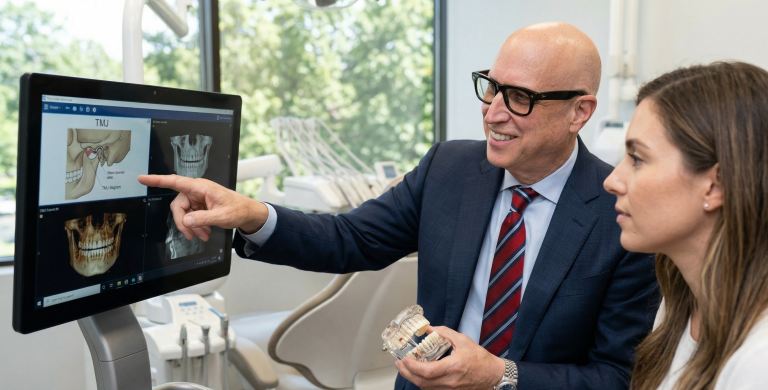
In a recent in-depth lecture, Beverly Hills cosmetic dentist and TMJ expert Dr. David S. Frey explores why so many patients are misdiagnosed and what a root-cause approach to TMJ treatment actually looks like.
Watch the full lecture:
Quick Answer: Is TMJ Pain Just Stress?
TMJ pain is rarely caused by stress alone. TMJ pain is the result of a structural and functional imbalance between the jaw joint, the muscles that control jaw movement, and the way the upper and lower teeth come together. Stress can amplify symptoms like clenching and grinding, but treating stress alone usually does not resolve the underlying problem.
What TMJ Disorder Actually Is
TMJ disorder, sometimes called TMD, affects the temporomandibular joint, which is the hinge that connects your lower jaw to your skull just in front of each ear. When this joint and its surrounding muscles do not function correctly, everything from your head, neck, and even posture can be effected.
A true TMJ evaluation looks at three interconnected systems:
- The jaw joint itself, including the disc and surrounding tissues
- The muscles of mastication, including the temporalis, masseter, and pterygoid muscles
- The bite, meaning how the teeth meet and guide jaw movement
When any one of these is off, the others compensate. This pattern results in pain.
Common Symptoms of TMJ Dysfunction
Many patients are surprised to learn how broad TMJ symptoms can be. The condition is rarely confined to the jaw alone. Common TMJ symptoms include:
- Persistent headaches or migraines, especially in the temples
- Neck and shoulder tension
- Facial pain, pressure, or fatigue when chewing
- Clicking, popping, or grinding sounds in the jaw
- Limited mouth opening or jaw locking
- Ear discomfort, fullness, or ringing (tinnitus)
- Worn, chipped, or sensitive teeth
A TMJ evaluation is worth considering if you experience any of these symptoms.
The Missing Piece: Muscle Dysfunction
One of the most overlooked factors to TMJ pain is the role of the jaw muscles. The temporalis, masseter, and pterygoid muscles are responsible for every chew, swallow, and clench. When they become overactive or strained, they can pull the jaw slightly out of its natural position.
That small shift creates a cycle. The muscles work harder to stabilize the jaw, the joint takes on uneven pressure, the bite is unaligned, and the muscles tighten further. Treatments that focus only on the teeth or only on the joint often miss this muscular component entirely, which is why symptoms return after a night guard or short course of medication.
Why TMJ Cases Are Rising
The increase in TMJ cases is not an isolated incident. Across the United States and globally, dentists are seeing similar patterns, with several factors at play:
- Softer modern diets that require less chewing during childhood development
- Reduced jaw growth, leading to smaller arches and crowded teeth
- Mouth breathing and low tongue posture
- Restricted nasal airways
- Long hours of forward head posture from screens and devices
These changes affect how the jaw develops and how it functions as an adult. Crowded teeth, restricted airways, and improper jaw positioning are all tied to TMJ.
Warning Signs Your Dentist May Spot First
Many indicators of TMJ dysfunction are visible during a routine dental exam, often before pain becomes severe. A trained eye looks for:
- Worn or flattened tooth surfaces
- Deep or uneven bite patterns
- Narrow dental arches
- Gum recession not explained by brushing
- Scalloped edges on the tongue
- Evidence of nighttime clenching or grinding
Advanced imaging, such as a CBCT (cone beam computed tomography) scan, can take diagnosis further by revealing joint compression, airway limitations, and posture-related issues that a standard X-ray will miss.
The Airway and Posture Connection
Growing research and clinical experience connects TMJ dysfunction to airway health. Patients who breathe through their mouth, have low tongue posture, or experience restricted nasal airflow can strain their jaw and surrounding muscles.
Posture matters, too. A forward head position shifts the lower jaw backward and changes how the bite closes. Addressing breathing patterns, tongue posture, and head and neck alignment can be a key part of long-term TMJ improvement, not just a side note.
Why Common Treatments Fall Short
Standard TMJ care includes night guards, anti-inflammatory medications, muscle relaxants, or Botox injections. Each has a place, and each can bring short-term relief. The limitation, however, is that these approaches rarely address the underlying imbalance between joint, muscles, and bite.
A more comprehensive, root-cause approach generally moves through three phases:
- Stabilize the jaw and reduce pain. This involves a custom orthotic or therapeutic appliance designed to position the jaw in a more relaxed posture.
- Confirm the corrected position. Once symptoms improve, the new bite relationship is tested over time to ensure it holds up.
- Restore proper function long term. Depending on the case, this may involve orthodontics, restorative dentistry, or a combination, so the bite supports the healthy jaw position permanently.
When to See a TMJ Dentist in Beverly Hills
Consider scheduling a TMJ evaluation if you experience any of the following:
- Jaw pain or fatigue that has lasted more than a few weeks
- Frequent headaches or migraines without a clear medical cause
- Clicking, popping, or locking when you open your mouth
- Worn or cracking teeth
- Ear pain or ringing with no infection
- Unexplained neck and shoulder tension
Early evaluation often means simpler, less invasive treatment.
Frequently Asked Questions
Is TMJ caused by stress?
Stress can worsen TMJ symptoms by increasing clenching and muscle tension, but rarely is it the root cause. Most TMJ disorders involve a structural or functional imbalance between the jaw joint, jaw muscles, and bite.
Can TMJ go away on its own?
Mild TMJ symptoms sometimes resolve on their own, especially after short periods of stress or jaw overuse. Persistent symptoms lasting more than a few weeks usually indicate an underlying issue that needs to be evaluated and treated.
What does a TMJ specialist actually do?
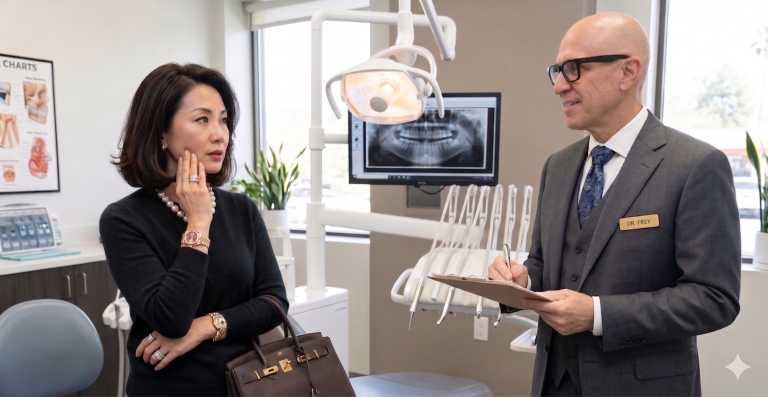
A TMJ specialist evaluates the jaw joint, jaw muscles, bite, airway, and posture to identify the root cause of symptoms. Treatment may include a custom orthotic, bite correction, restorative dentistry, or coordinated care.
Are night guards enough to treat TMJ?
Night guards can reduce damage from grinding and offer short-term relief, but they rarely correct the underlying imbalance causing TMJ symptoms. Many patients need a more comprehensive approach to achieve long-term results.
How long does TMJ treatment take?
Initial pain relief is often achieved within a few weeks of starting treatment with a properly designed orthotic. Full bite stabilization and long-term correction can take several months.
Does insurance cover TMJ treatment?
Coverage varies widely. Some medical and dental plans cover diagnostic imaging and initial therapy, while comprehensive bite correction is often considered elective. The Perfect White Smile team can help review benefits during your consultation.
TMJ is Complex
TMJ pain is rarely just about stress. It is a complex condition involving the jaw joint, the muscles that move it, the bite, and often the airway and posture. Patients who understand this are better equipped to seek the right kind of care, and to expect lasting results rather than temporary relief.
If you are experiencing jaw pain, headaches, or clicking and you suspect TMJ, a thorough evaluation is the most important first step.
Schedule a TMJ Consultation in Beverly Hills
Dr. David S. Frey is a Beverly Hills cosmetic dentist with extensive experience in TMJ diagnosis and root-cause treatment. Patients from all over LA and greater Los Angeles and even other counties such as Orange County and San Diego travel because Dr. Frey is known about best TMJ dentists in California and United States.
Take the first step toward understanding your jaw pain and schedule an evaluation today.